
Digital Marketing Internship: Skills, Projects and Career Benefits in 2026
Introduction
Are you a student, fresher, or job seeker interested in building a career in digital marketing? A digital marketing internship can help you understand how businesses attract customers, promote products, generate leads, and increase sales through online channels.
Digital marketing is no longer limited to posting content on social media. It includes search engine optimisation (SEO), paid advertising, content marketing, email marketing, analytics, customer relationship management (CRM), and marketing automation.
An internship provides an opportunity to apply these concepts to practical assignments and business problems.
In 2026, employers increasingly value candidates who can demonstrate practical skills, understand marketing data, use AI tools responsibly, and explain how their work contributes to business objectives.
In this guide, we will explore what a digital marketing internship involves, the skills you should learn, the projects you can work on, and how an internship can help you prepare for your first job.
What Is a Digital Marketing Internship?
A digital marketing internship is a structured learning or work experience in which individuals assist with online marketing activities under appropriate supervision.
Depending on the organisation, interns may work with a marketing team, agency, startup, educational institute, or local business.
Typical responsibilities include:
- Researching keywords and competitors.
- Creating social media content.
- Assisting with SEO activities.
- Preparing advertising copy and creative briefs.
- Supporting Meta Ads and Google Ads campaigns.
- Analysing website traffic and campaign reports.
- Organising leads and updating CRM records.
- Preparing marketing presentations and reports.
- Exploring AI tools and marketing automation workflows.
The exact responsibilities depend on the internship programme. Some internships focus on content and social media, while others provide exposure to performance marketing, analytics, and paid advertising.
A good internship should provide clear learning objectives, meaningful assignments, feedback, and appropriate supervision.
Why Is a Digital Marketing Internship Important in 2026?
Digital marketing tools and platforms change frequently. Understanding the theory is useful, but employers also need people who can apply their knowledge to real marketing tasks.
An internship can help bridge the gap between learning and professional work.
1. Gain Practical Experience
You can learn how marketing activities are planned, executed, measured, and improved.
2. Understand Business Requirements
You may discover that successful marketing involves more than views and likes. Businesses need qualified leads, sales, customer retention, and measurable results.
3. Learn Professional Tools
Depending on the role, you may gain experience with Google Analytics 4, Google Ads, Meta Ads Manager, Canva, CRM platforms, spreadsheets, and AI-assisted workflows.
4. Develop Communication Skills
Marketing professionals often work with designers, sales teams, business owners, and customers. An internship can help you develop professional communication and reporting skills.
5. Build a Portfolio
Documenting your assignments and projects can help demonstrate your capabilities when applying for jobs.
6. Understand Your Career Interests
An internship can help you decide whether you prefer SEO, content creation, paid advertising, analytics, social media, or marketing automation.
Essential Skills to Learn During a Digital Marketing Internship
A successful internship should develop a combination of marketing knowledge, technical ability, analytical thinking, and professional skills.
1. Search Engine Optimisation (SEO)
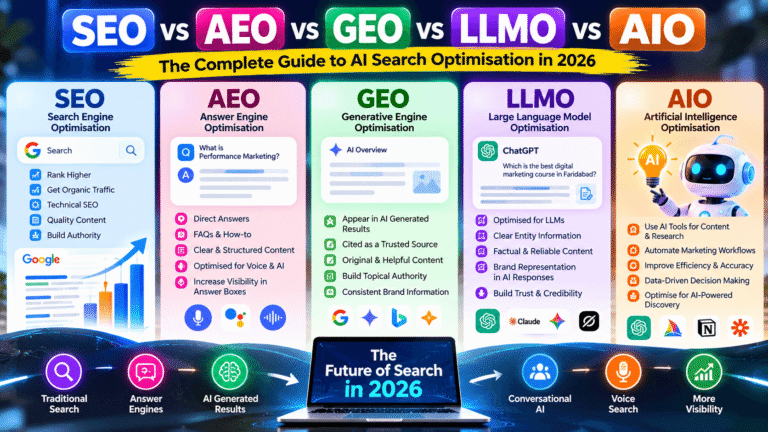
SEO helps websites improve their visibility in organic search results.
Important skills include:
- Keyword research.
- Search intent analysis.
- On-page optimisation.
- Internal linking.
- Basic technical SEO.
- Content optimisation.
- Google Search Console fundamentals.
Practical assignment: Conduct an SEO audit of a website and recommend improvements to its titles, headings, internal links, and content.
2. Social Media Marketing
Social media marketing involves planning content, communicating with audiences, and measuring engagement across suitable platforms.
Important skills include:
- Content calendar planning.
- Caption writing.
- Audience research.
- Basic graphic design.
- Short-form video planning.
- Community management.
- Social media performance reporting.
Practical assignment: Create a 30-day content calendar for a business, including post topics, captions, formats, and objectives.
3. Performance Marketing and Paid Advertising
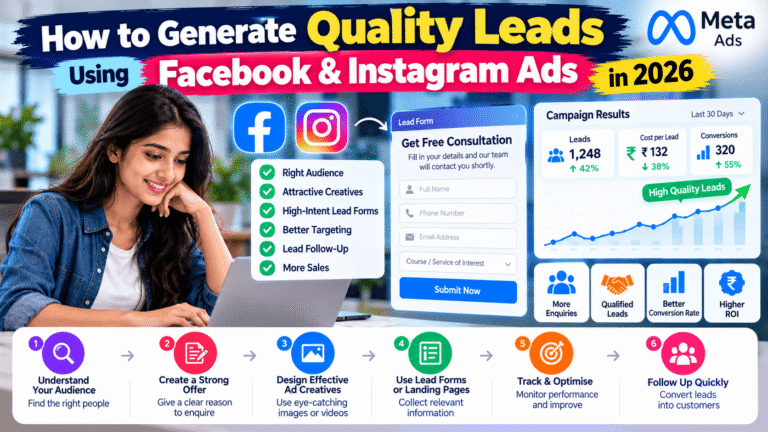
Performance marketing focuses on measurable outcomes such as leads, conversions, purchases, and customer acquisition.
Interns may learn:
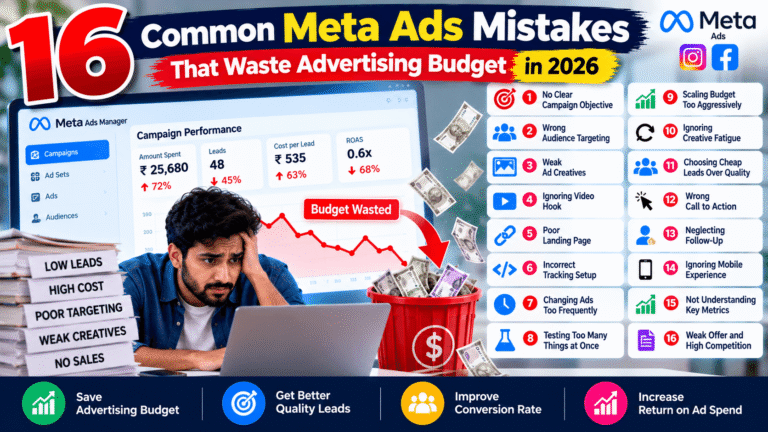
- Meta Ads campaign fundamentals.
- Google Ads campaign fundamentals.
- Audience research.
- Advertising copywriting.
- Creative testing.
- Budget planning.
- Cost per lead and conversion analysis.
- Campaign reporting.
Practical assignment: Develop a campaign plan for a local business, including its target audience, advertising objective, creative concepts, budget assumptions, and measurement plan.
Actual advertising campaigns should be launched only with appropriate authorisation and budget approval.
4. Content Marketing and Copywriting
Content marketing helps businesses attract and educate audiences through useful information.
Interns can practise writing:
- SEO-friendly blog posts.
- Website service pages.
- Social media captions.
- Email newsletters.
- Advertising headlines.
- Video scripts.
- Calls to action.
Practical assignment: Write an informative blog post, create social media content from it, and prepare a short email promoting the same topic.
5. Data Analytics and Reporting
Marketing analytics helps teams understand whether their activities are producing meaningful results.
Learn the basics of:
- Google Analytics 4.
- Google Search Console.
- Click-through rate (CTR).
- Cost per click (CPC).
- Cost per lead (CPL).
- Conversion rate.
- Customer acquisition cost (CAC).
- Return on ad spend (ROAS).
Practical assignment: Prepare a marketing report using a sample dataset and explain which metrics improved, which declined, and what should be investigated next.
6. AI Tools for Digital Marketing
AI tools can assist with research, brainstorming, content development, creative production, and reporting.
Interns can learn to use AI for:
- Generating content ideas.
- Developing advertising copy variations.
- Organising customer feedback.
- Summarising reports.
- Preparing creative briefs.
- Supporting competitor research.
- Reviewing content structure.
AI-generated information should be checked for accuracy, originality, relevance, and compliance before publication.
7. CRM and Marketing Automation
CRM systems help businesses organise leads, customer interactions, and sales opportunities.
Interns may learn how to:
- Record and categorise enquiries.
- Track lead status.
- Schedule follow-up reminders.
- Prepare lead reports.
- Understand automated workflows.
- Connect forms with supported CRM systems.
Practical assignment: Design a sample workflow showing how a new enquiry moves from a website form to a CRM, then to a counsellor follow-up and final conversion status.
8. Communication and Problem-Solving
Technical skills are not enough. Employers also value the ability to explain decisions, manage deadlines, collaborate with colleagues, and respond constructively to feedback.
Interns should practise presenting their work, documenting changes, asking clear questions, and explaining the reasoning behind their recommendations.
Practical Digital Marketing Projects for Interns
One of the best ways to demonstrate your skills is to build a portfolio of relevant projects.
Here are eight projects suitable for beginners.
Project 1: Website SEO Audit
Review a website’s content structure, page titles, headings, internal links, and basic technical SEO.
Portfolio output: Audit report with prioritised recommendations.
Project 2: Social Media Campaign
Create a campaign for a product, service, or educational brand.
Portfolio output: Content calendar, sample posts, captions, and performance objectives.
Project 3: Meta Ads Campaign Plan
Design a Facebook and Instagram advertising strategy for a relevant business.
Portfolio output: Audience plan, campaign structure, ad copy, creative concepts, budget assumptions, and conversion goals.
Project 4: Google Ads Keyword Research
Research search terms relevant to a product or service and organise them according to intent.
Portfolio output: Keyword spreadsheet, grouping strategy, and proposed campaign structure.
Project 5: SEO Blog Writing
Write an informative article that answers a specific audience question.
Portfolio output: Blog post, meta title, meta description, suggested URL, internal links, and supporting content ideas.
Project 6: Marketing Analytics Dashboard
Use sample data to analyse campaign performance.
Portfolio output: Dashboard showing traffic, leads, conversions, costs, and relevant observations.
Project 7: AI Marketing Workflow
Use AI to support a repeatable marketing task, such as preparing content ideas or summarising campaign data.
Portfolio output: Workflow description, prompts or process documentation, quality checks, and example results.
Project 8: Lead Management Automation Plan
Design a workflow connecting lead collection, CRM records, follow-up reminders, and reporting.
Portfolio output: Workflow diagram, required tools, process rules, and testing checklist.
If you do not have access to real client campaigns, use simulated data or clearly labelled practice projects. Never present sample results as genuine business achievements.
How to Build a Digital Marketing Internship Portfolio
A portfolio helps employers evaluate your practical skills beyond your academic qualifications or certificates.
Follow these steps:
Step 1: Select your strongest projects. Start with three to five projects relevant to the role you want.
Step 2: Explain the objective. Describe the business problem or marketing goal.
Step 3: Show your process. Explain the research, tools, decisions, and methods you used.
Step 4: Present the output. Include screenshots, sample creatives, reports, content, or dashboards when you have permission to share them.
Step 5: Explain the results honestly. Distinguish actual campaign results from hypothetical targets or simulated exercises.
Step 6: Document what you learned. Explain what you would improve if you repeated the project.
A well-documented portfolio can make your skills easier to evaluate during interviews.
Digital Marketing Internship Stipend and Salary in India
Internship compensation varies considerably depending on the employer, location, role, working hours, responsibilities, and the candidate’s existing skills.
Some internships are paid, some offer performance-linked compensation, and some are structured as educational placements. Do not assume that every internship provides a stipend.
Before accepting an internship, confirm:
- Whether it is paid or unpaid.
- The stipend amount and payment schedule.
- Working hours and duration.
- Whether training is provided.
- The actual responsibilities.
- Whether advertising accounts or real projects are available.
- Whether a certificate or reference is offered.
- Whether there is a genuine opportunity for further employment.
For full-time digital marketing jobs, compensation depends on experience, specialisation, location, and demonstrated ability. An internship certificate alone does not guarantee a job or a particular salary.
How to Find a Digital Marketing Internship
You can search for internships through job portals, company career pages, professional networks, local agencies, startups, and educational institutions.
Use relevant search terms such as:
- Digital Marketing Intern.
- SEO Intern.
- Social Media Marketing Intern.
- Performance Marketing Intern.
- Paid Ads Intern.
- Marketing Analytics Intern.
- AI Marketing Intern.
When applying, prepare a concise resume, highlight relevant projects, and explain which tools and skills you have practised.
Avoid applying only with a generic message. Employers are more likely to understand your suitability when you clearly connect your skills to their requirements.
Be cautious of opportunities that demand substantial payment for a job placement, promise guaranteed employment without clear conditions, or require you to handle client budgets without adequate supervision.
Digital Marketing Internship vs Digital Marketing Course
A course and an internship serve different purposes.
| Factor | Digital Marketing Course | Digital Marketing Internship |
|---|---|---|
| Primary purpose | Structured learning | Applying skills to practical work |
| Learning method | Lessons, demonstrations and assignments | Tasks, projects and workplace experience |
| Guidance | Trainer or instructor | Supervisor or marketing team |
| Practical exposure | Depends on the programme | Depends on the organisation and role |
| Portfolio | Can include practice projects | Can include approved internship work |
| Employment outcome | Not guaranteed | Not guaranteed |
For many beginners, the most effective approach is to learn the fundamentals first and then gain supervised practical experience.
A course should not be considered a substitute for real work, and an internship should not be considered a substitute for learning essential concepts.
A 30-Day Digital Marketing Internship Preparation Plan
If you are new to digital marketing, use this roadmap to prepare for internship applications.
Week 1: Learn the Fundamentals
Understand SEO, social media marketing, content marketing, paid advertising, and marketing funnels.
Week 2: Practise the Tools
Explore relevant tools such as Canva, Google Search Console, Google Analytics 4, Meta Ads Manager, and spreadsheets.
Week 3: Build Two Projects
Complete a basic SEO audit and a social media campaign plan. Document your process and recommendations.
Week 4: Prepare Your Portfolio and Apply
Create a resume, organise your projects, practise interview questions, and apply for suitable internship opportunities.
This is a preparation roadmap, not a guarantee that you will become job-ready in 30 days. Your progress will depend on your starting knowledge and the amount of practical work you complete.
Learn Digital Marketing with Hunar Digital
Hunar Digital provides a learning pathway for students, freshers, job seekers, and professionals interested in digital marketing and performance marketing.
When evaluating a training programme, look for a practical syllabus covering SEO, social media marketing, Meta Ads, Google Ads, analytics, AI tools, and marketing automation.
Also review the trainer’s experience, the quality of assignments, access to practical projects, internship conditions, and the type of feedback learners receive.
Interested in developing practical digital marketing skills?
Explore available courses at Hunar Digital:
Website: https://hunardigital.com/
Frequently Asked Questions
1. Who can apply for a digital marketing internship?
Students, freshers, graduates, and career changers can apply, depending on the employer’s eligibility criteria. Some roles require prior training, while others accept beginners.
2. Do I need coding skills for a digital marketing internship?
Most entry-level marketing internships do not require advanced coding. Basic website knowledge, analytics, spreadsheets, and an understanding of tracking systems can be useful.
3. Is a digital marketing internship useful for freshers?
Yes, a well-structured internship can help freshers develop practical skills, understand workplace expectations, and build a portfolio.
4. Which tools should a digital marketing intern learn?
Start with tools relevant to the role, such as Canva, Google Search Console, Google Analytics 4, Meta Ads Manager, Google Ads, spreadsheets, and a CRM platform.
5. How long should a digital marketing internship last?
Duration depends on the programme and responsibilities. Short internships can provide introductory exposure, while longer placements may allow more time for projects, feedback, and deeper learning.
6. Can I get a job after completing an internship?
An internship may improve your preparation for employment, but a job is not guaranteed. Employers also consider practical ability, communication, relevant experience, and role requirements.
7. Can I do a digital marketing internship without experience?
Yes. Look for beginner-friendly roles and build sample projects to demonstrate your interest and basic knowledge.
8. What is the difference between a digital marketing intern and a performance marketing intern?
A digital marketing intern may work across SEO, content, social media, and other channels. A performance marketing intern typically focuses more on paid advertising, conversion tracking, campaign metrics, and lead or sales generation.
Conclusion
A digital marketing internship can be a valuable step towards building a career in online marketing, especially when it includes practical assignments, guidance, and opportunities to learn from real business challenges.
By developing skills in SEO, social media, paid advertising, analytics, AI tools, and marketing automation, beginners can prepare for a wider range of entry-level opportunities.
The most important factor is not simply completing an internship or obtaining a certificate. It is developing practical skills, documenting your work, understanding marketing results, and demonstrating what you can contribute to an organisation.
Learn the fundamentals, build a credible portfolio, gain practical experience, and keep improving your skills.